Science Doesn’t Wait for Graduation
How belonging, early trust, and real responsibility leads to meaningful discovery by undergraduate students

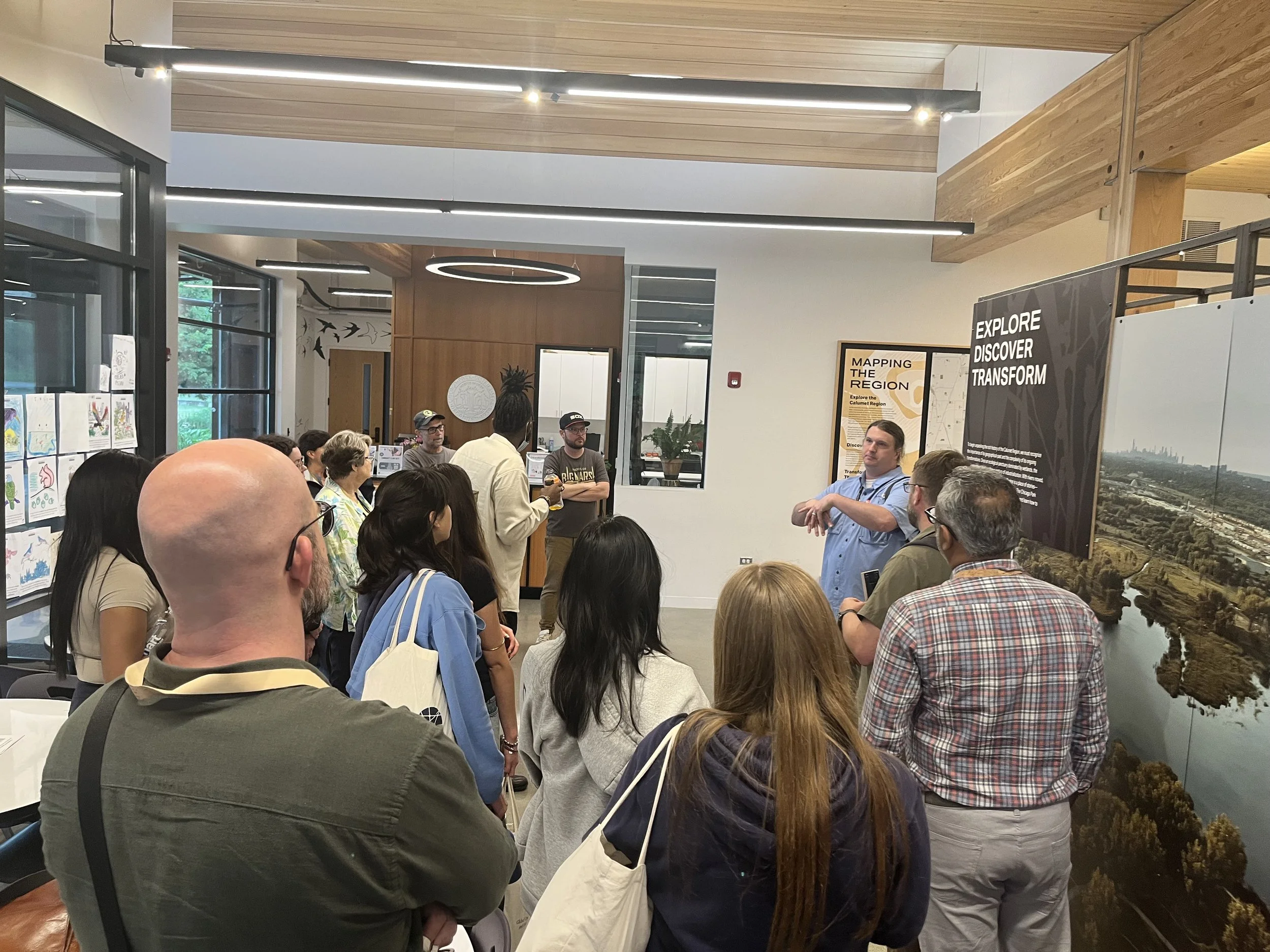
Student explaining their research during poster session at Walder Foundation's 2025 Biota Awards Celebration in September 2025. Photo credit: Eric Clarke Photography
Undergraduate research is often described as a steppingstone — a place to practice before science truly begins. But in some undergraduate summer research programs in Chicagoland, students are already shaping the scientific record.
Working alongside researchers in labs and major cultural institutions, students are generating and analyzing data, testing methods, building research capacity, and contributing new knowledge to their fields.
It's clear: when students are treated as scientists, not future scientists, the conditions for better science are created.
Producing Knowledge That Matters Now: Two Walder Foundation Grant Partners
Elmhurst University’s Ecology, Conservation, and Biology* (ECB) Summer Research Program and the Illinois Consortium for Life and Environmental Sciences* (ICLES) summer research program, led by Chicago State University, allow undergraduate researchers to pursue original, semi-independent projects addressing active scientific questions in environmental sustainability and the life sciences.
Walder Foundation, alongside other federal and private funders, has supported these programs since 2024. Initially, Foundation support was given specifically for environmental sustainability programming but was expanded in 2026 to also support life sciences programming, in response to federal funding shifts. Without private support, local undergraduate summer research programming would have shuttered.
Past research conducted by ECB Summer Research Program participants has addressed freshwater systems, biodiversity modeling, invasive species, and conservation science. Students have collaborated with scientists affiliated with institutions like the John G. Shedd Aquarium and The Morton Arboretum.
Students involved in Chicago State University’s programming have explored topics such as PFAS contamination and removal, microplastics and antibiotic effectiveness, and bacterial pathogens carried by urban wildlife in understudied Chicago South Side green spaces, among others.
“The research projects that students work on are all designed to answer real‑world problems with no known solutions, with the end goal of sharing their knowledge through papers and presentations,” shares Nathan Bradshaw, Ph.D., director of the ECB Summer Research Program.
Student presentations have been given at reputable scientific conferences, such as the 2025 American Society of Mammalogists conference, and awards programs, including the 2025 Biota Awards Celebration Event.


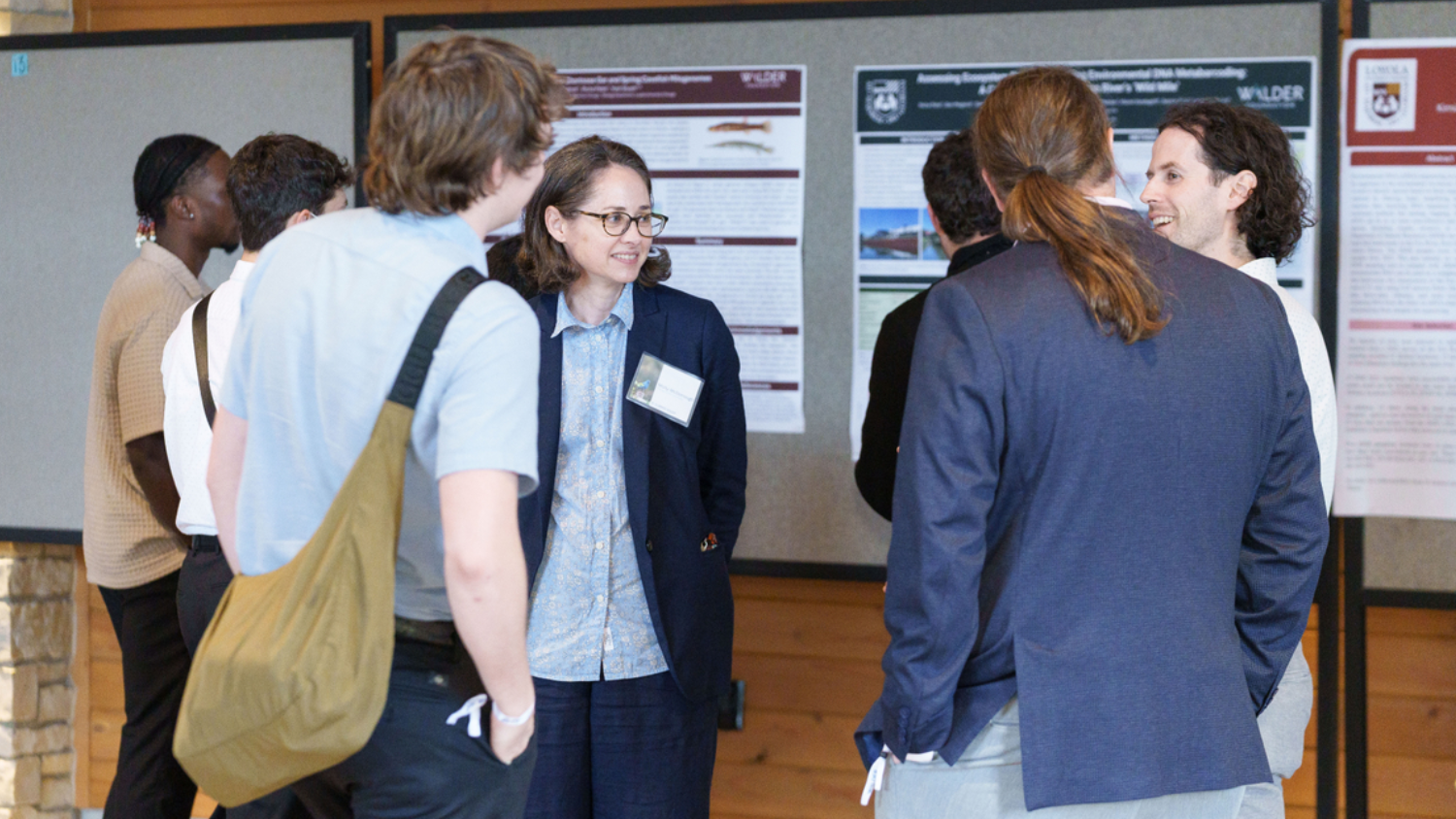
These types of successes, alongside research and engagement with Walder Foundation’s Biota Awardees, have informed the Foundation’s commitment to supporting supplemental grants for student research in the labs of existing Biota Awardees in 2025 and 2026.
Why This Research Succeeds
The impact of undergraduate research is no longer in question. What deserves closer attention is why some research experiences lead to deeper engagement and more meaningful outcomes than others.
Survey results from Elmhurst College and Chicago State’s 2024 and 2025 programs shows that when students experience belonging and ownership, they advance science as they grow professionally, allowing for an infrastructure and ecosystem that may become more rigorous, relevant, and resilient.
Feelings of belonging and ownership have enabled students to persist through challenges, engage deeply with their work, and treat research as consequential.
For Gregory Ruthig, Ph.D., an ECB Summer Research Program mentor and professor of biology at North Central College, a student’s transition often becomes visible when they present their work publicly for the first time.
“My goal is to have students see themselves as researchers as soon as possible,” shares Ruthig. “When they see that their work relates to the work of professional scientists, the idea of becoming a professional scientist does not seem as abstract. I notice a change in them when they present their work for the first time. They understand that even though the process can be messy and frustrating, they end up with a story to tell about their findings. They are proud to present what they’ve found and pleased to know that they are the first people to generate this knowledge.”
The experience of Marco Garcia, a past student in Chicago State University’s summer research program, validates Ruthig’s aim and perspective.
“Being able to not only conduct research but also present it has given me valuable experience and growth,” Garcia shares. “At the same time, I recognize how far I’ve come. There was a point when I felt nervous and unsure — when my journey in research was just beginning. But that experience taught me something important: you always have to take that first step. Stepping into those early moments of uncertainty is what led me to where I am now.”
Structured mentoring plans, cohort-based participation, and intentional peer interaction also help shift students’ roles from helpers to collaborators.
“When seen as a collaborator, students engage with their mentors and share ideas to move the project forward rather than simply following research procedures and protocols,” shares Chris Botanga, Ph.D., ICLES project director. “I have seen that this level of collaborative engagement adds value to projects in manners that cannot be achieved otherwise.”
Garcia agrees.
“When I am treated as a collaborator, I feel recognized as more than an intern — I feel like an essential part of the lab,” he shares. “That sense of inclusion reinforces that my contributions matter. Every individual brings value, and when that value is acknowledged, it helps build a strong foundation. With a solid foundation in place, any engagement or collaboration becomes more effective, meaningful, and ultimately more successful.”
See how this work is unfolding, as shared with our community on social media:
Why Walder Foundation Invests Early
Walder Foundation’s focus on early‑career and undergraduate research is grounded in a simple premise: long‑term scientific success depends on what and who receives support in the early stages.
Scientific breakthroughs rarely emerge fully formed at advanced career stages. They grow from early opportunities to ask questions, test ideas, and build confidence as a researcher. When those opportunities are delayed or restricted to a narrow segment of students, science loses both talent and perspective.
Early‑career funding also plays a stabilizing role in a fragile research ecosystem. When federal funding for longstanding initiatives is reduced or terminated, foundation support helps sustain research continuity — retaining mentors, supporting students through project completion and dissemination, and ensuring promising lines of inquiry don’t vanish midstream.
For students stepping into research for the first time, these opportunities can change what feels possible. And for science, they ensure that new questions, perspectives, and discoveries take shape — right now and in response to future challenges, too.
*This program was formerly called the Ecology, Conservation, and Biodiversity Summer Research Program. Moving forward, the program will serve students with interests in environmental sustainability and/or life sciences.
**The former program name was the Illinois Louis Stokes Alliance for Minority Participation summer research program. Without continued National Science Foundation support, the program folded. The program is now called the Illinois Consortium for Life and Environmental Sciences, and is comprised of institutions of higher education that foster student research experiences and professional development opportunities.
Learn more about Walder Foundation's environmental sustainability work: walderfoundation.org/environmental-sustainability
Get more stories like this delivered to your inbox.