Scaling Nature to Meet the Storm
Moving from basement backups to aligned regional systems for water resilience in Chicago
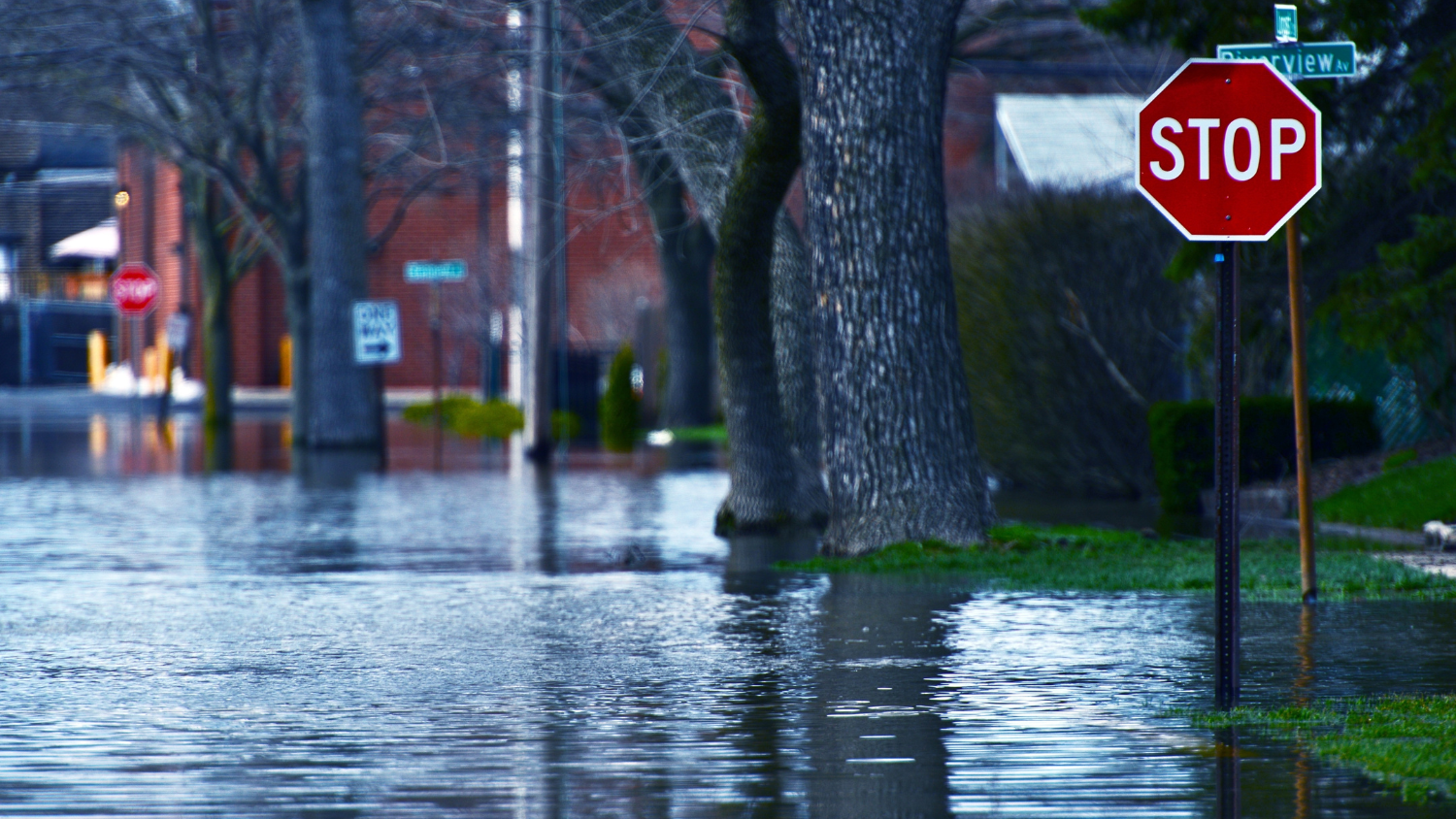
From basement backups to overwhelmed outfalls, the Chicago region is feeling the strain of heavier rains and aging stormwater systems.
Recently, the Chicago Sun-Times reported residents of 71 of the City’s 77 neighborhoods called 311 to file a complaint related to water in their basement or street in 25 hours alone.
Area residents, organizations, and leaders are continually grappling with prevention and response strategies.
Community investment in and long-term support of nature‑based solutions (NBS) is one critical component of overall flood prevention and contributes to the development of a climate-resilient city.
Setting the Stage: What are Nature-Based Solutions and How Do They Help?
NBS address societal challenges through the protection, management, and restoration of ecosystems.
NBS can help:
reduce flooding
improve water quality
cool neighborhoods
create healthier public spaces
provide biodiversity benefits
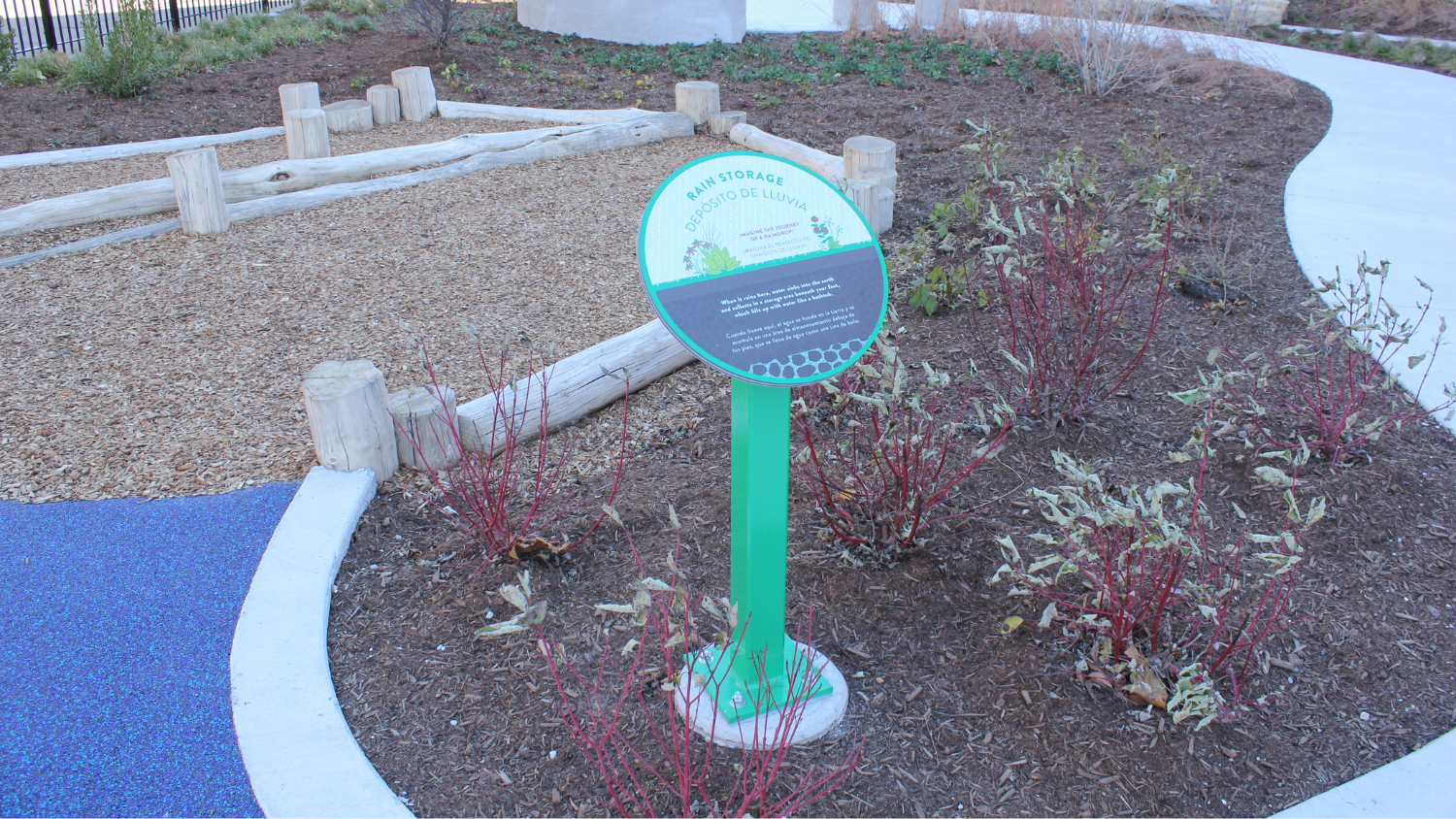
NBS employ nature “at a meaningful scale for multiple benefits,” from establishing pocket gardens and green roofs on city buildings, to incorporating urban forests and floodable parks.
To work at scale, NBS require more than one‑off projects; they need effective planning tools and coordinated systems that align data, policy, community engagement, funding, and long‑term maintenance.
“Scaling nature‑based solutions isn’t just about planting rain gardens or adding permeable surfaces — it’s about building the shared systems, leadership, and community relationships required to sustain them,” shares Casey Sebetto, Program Officer, Environmental Sustainability, Walder Foundation.
See how this work is unfolding, as shared with our community on social media:
What it Takes to Scale Green Stormwater Infrastructure: Four Grantee Organization Case Studies
Green stormwater infrastructure (GSI) is a type of NBS that focuses primarily on stormwater management.
Barriers and gaps to scaling GSI, as identified through regional convenings and feasibility studies, include fragmented interagency roles; lack of shared standards and data; uneven community participation; and insufficient maintenance systems.
In 2024, Walder Foundation distributed grants to select organizations aiming to strengthen Chicago’s community of practice for GSI by addressing these barriers and gaps. The overall aim was to support the production of solutions that could be implemented equitably and at scale.
A look into grantee efforts and progress* is examined below through brief case studies, revealing advancements towards a stronger regional GSI ecosystem.
“Foundation grantees, alongside a robust landscape of other organizations and leaders, are collaboratively and meaningfully demonstrating what coordinated regional resilience looks like,” Sebetto says.
Case Study: Community Co‑Governance and Equitable Investment Strategies
Alliance for the Great Lakes, with project partners including Calumet Collaborative and the Illinois Water Justice Coalition, is constructing a “bottom‑up” infrastructure needed for equitable water policy. The infrastructure is informed by flooding and sewage vulnerability assessments, community‑driven indicators, co‑governance case studies, and a community advisory committee that helps determine how investments in water infrastructure should be prioritized.
“When a community feels authentic ownership over a project, they are more likely to support its maintenance and protection, ensuring it lasts for generations, unlike “top-down” green infrastructure projects that often fail without community support,” shares Angela Larsen, Director of Planning at Alliance for the Great Lakes.
Resources and tools available through this bottom-up infrastructure are helping City agencies align data with community priorities, ensuring developed processes and policies are both technically feasible and community informed.
Case Study: Interagency Policy Alignment and a New GSI Strategy
The City of Chicago’s Department of Environment is leading a comprehensive update to Chicago’s GSI Strategy, supported by a water policy advisor whose role is co-funded by Walder Foundation and Joyce Foundation. The advisor is managing asset mapping, cross‑departmental coordination, and community advisory processes. The release of the updated strategy is planned for Spring 2026.
“The 2026 Green Infrastructure Strategy will help the City and partner organizations focus our efforts on the communities that are most vulnerable to the effects of climate change, align our work with the priorities of those communities, and facilitate coordination between all stakeholders working on green infrastructure,” shares Jackie Rigley, Senior Water Policy Advisor at City of Chicago. “As such, the strategy will be both a roadmap of specific, recommended actions and a handbook that outlines a shared mission and goals, ensuring that any future green infrastructure effort is anchored in our values, led by equity and climate data, and adaptable to various circumstances.”

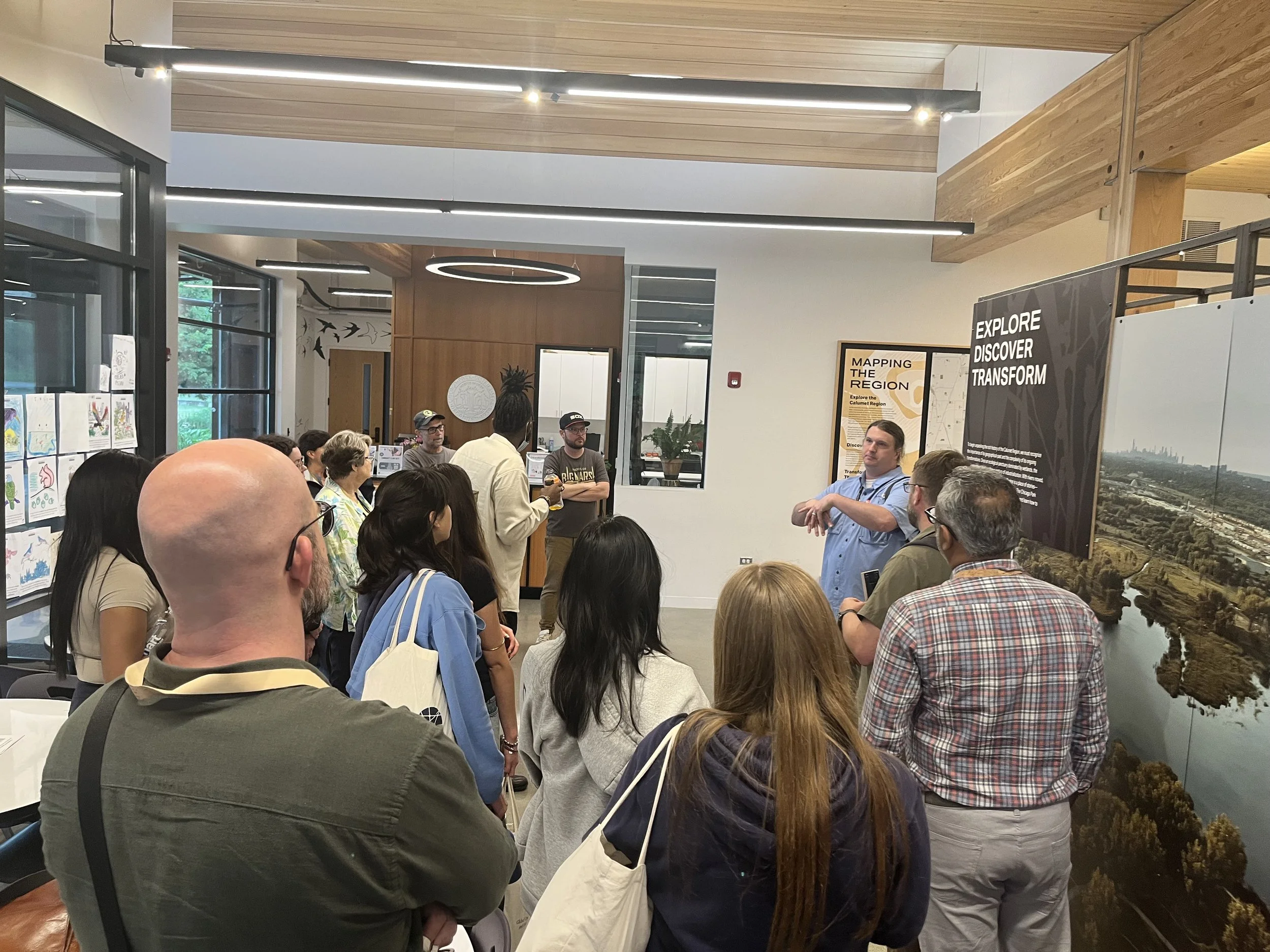
A green infrastructure public meeting hosted by the City of Chicago’s Department of Environment in June 2025.
Photo credit: Greenprint Partners
Case Study: Building Chicago’s Longterm GSI Maintenance System
If installation is the spark, maintenance is the fuel, and Healthy Schools Campaign (HSC) is helping build a system to sustain Chicago’s GSI for the long-term.
“Without long-term maintenance, green infrastructure simply can’t deliver the full benefits it is designed to provide,” shares Claire Marcy, Senior Vice President of Health Schools Campaign. “A strong, well-funded long-term maintenance plan is essential for good stewardship of these public assets, and the land and communities where this infrastructure is installed.”
HSC helps facilitate and convene the GSI Maintenance Working Group, a cross-sector collaborative group with interest in GSI maintenance in Chicago and comprised of City departments, sister agencies, and nonprofit and community partners. They also facilitate the Interagency Maintenance Committee, now serving as the steering committee for the City’s GSI Strategy update. This group brings together representatives from various City of Chicago departments to define roles, align processes, and solve long‑standing maintenance challenges.
“In order for green infrastructure to function well over time, we need thoughtful investment in specialized maintenance training and workforce development, along with buy-in at every level of government,” shares Marcy. “Green infrastructure must be treated as essential infrastructure, not an add-on.”

Case Study: Standardizing Data and Building Optimization Frameworks
Metropolitan Planning Council (MPC) is developing Right Infrastructure, Right Place (RIRP), a benefits‑driven, climate‑ and equity‑informed framework for prioritizing GSI investments that integrates neighborhood‑scale climate projections, hydrologic modeling, and socioeconomic indicators.
In the current phase, a decision-support tool is being built to enable stormwater agencies to evaluate which areas of a community stand to benefit most from GSI and where GSI will underperform.
“The tool works by simplifying how technical analysis is captured and communicated across public sector stakeholders,” shares Ryan Wilson, Senior Director, MPC. “When the technical case is clearer and more consistent, stormwater agencies have more space to deliberate on other tradeoffs — community quality of life, local priorities, equity concerns — without those considerations getting drowned out by conflicting data or narrow cost frameworks.”
Moving beyond data toward a shared, evidence-based framework helps institutions translate complex information into coordinated, defensible pathways that deliver long-term public value.
“This is why MPC and our partners continue to focus on initiatives that work outside traditional silos, building the decision-making infrastructure that makes better outcomes possible,” shares Wilson.
Collaboration in Action
The power of this ecosystem lies in how the work connects to best scale nature-based infrastructure and ensure community engagement and equity.
Scaling Nature-Based Infrastructure Examples
MPC’s regional indicators and modeling can integrate with the City’s GSI Strategy and Alliance’s environmental justice vulnerability indicators, creating a consistent regional framework
The Alliance’s advisory structures and HSC’s ongoing community engagement efforts inform City decision‑making
HSC’s facilitation of committees ensures long‑term sustainability is built into City planning, not addressed after the fact
Ensuring Community Engagement and Equity Examples
The Alliance equips neighborhood partners with tools to interpret data and advocate for improvements
HSC routes community voices from schoolyards to citywide planning tables
City public meetings, advisory committees, and digital feedback hubs invite residents into GSI planning
Looking ahead: Toward a Regional Ecosystem for Climate Resilience
When the 2026 Green Stormwater Infrastructure Strategy is released, it will mark a milestone in Chicago’s movement toward coordinated, equitable, and climate‑ready stormwater management and overall climate resilience.
The region is increasingly more prepared, thanks in part to Foundation grantee organizations, who are aligning leadership and policy infrastructure; building share data, modeling, and prioritization tools; ensuring communities are invited to and can guide final decision making; and developing long-term maintenance and sustainability systems.
Together, they are helping Chicago build not just green infrastructure, but a resilient, community‑centered, regionwide system capable of scaling NBS for years to come.
*Case studies provide examples of work by the various organizations, and are not meant to be representative of each organization’s scope of work.
Learn more about Walder Foundation's environmental sustainability work:
walderfoundation.org/environmental-sustainability.
Get more stories like this delivered to your inbox.
Sign up with your email address to receive news and updates.