Strengthening the Immigration Legal Ecosystem in Chicago
Walder Foundation’s approach to supporting immigration legal services in a time of overwhelming need

January 2025 training hosted by DePaul University's Asylum & Immigration Law Clinic
Photo courtesy of DePaul University
For immigrants, refugees, and asylum seekers, the path toward stability in a new country begins with access to quality immigration legal services. For many, legal aid providers are a lifeline.
While the number of organizations that provide some form of legal counsel has grown significantly over the years, those that can support complex, long-term cases, including removal defense and asylum petitions, remain limited. When already-limited supports are overwhelmed, this can greatly jeopardize immigrants’ experiences and livelihoods, as well as that of the broader community.
In response to the many challenges the field is facing, Walder Foundation recently provided a new round of two-year grants, totaling $3.6 million, focused on training and mentorship to help immigrant-serving organizations invest in staff development to respond to this complex landscape. Strengthening the immigration legal services ecosystem is crucial as Chicago continues to lead as a welcoming region.
See how this work is unfolding, as shared with our community on social media:
Walder Foundation’s legal ecosystem funding approach is designed around the following three, interdependent strategies, identified and explored further below.
1. Enhancing the Infrastructure of Anchor Organizations
Organizations with deep technical legal immigration expertise and a history of handling highly complex cases are facing unprecedented demand.
The Approach
Unlike with criminal law, where individuals are guaranteed the right to an attorney, immigration falls within the system of civil law. Anchor organizations are equipped with teams who can provide legal aid to those with some of the most complicated cases. Walder Foundation’s support will contribute to their mentorship of newer attorneys and sharing of resources and expertise in the field.
The National Immigrant Justice Center (NIJC) is a leader nationwide for its knowledge and expertise in immigration law. Chicagoland’s nonprofit and private practice legal advocates rely on the learnings, policy memos, and practice guidance that NIJC provides. Other organizations, such as the North Suburban Legal Aid Clinic and Erie Neighborhood House, are helping ensure legal access, fair practices, and due process. A number of Chicago-based organizations are also collaborating through the Midwest Immigration Defender’s Alliance to provide universal representation to detained immigrants facing deportation through the Chicago Immigration Court.
“With the federal government’s growing attacks on due process, ensuring our communities can exercise their rights is more important and more challenging than ever,” shares Mary Meg McCarthy, Executive Director of NIJC. “We are grateful to be part of a strong infrastructure of community and legal advocates who share information and resources. With Walder Foundation’s partnership, NIJC has and will continue to enhance our training and capacity-building efforts to strengthen this shared infrastructure and collectively ensure that our communities have the opportunity to defend our rights and uphold the rule of law.”
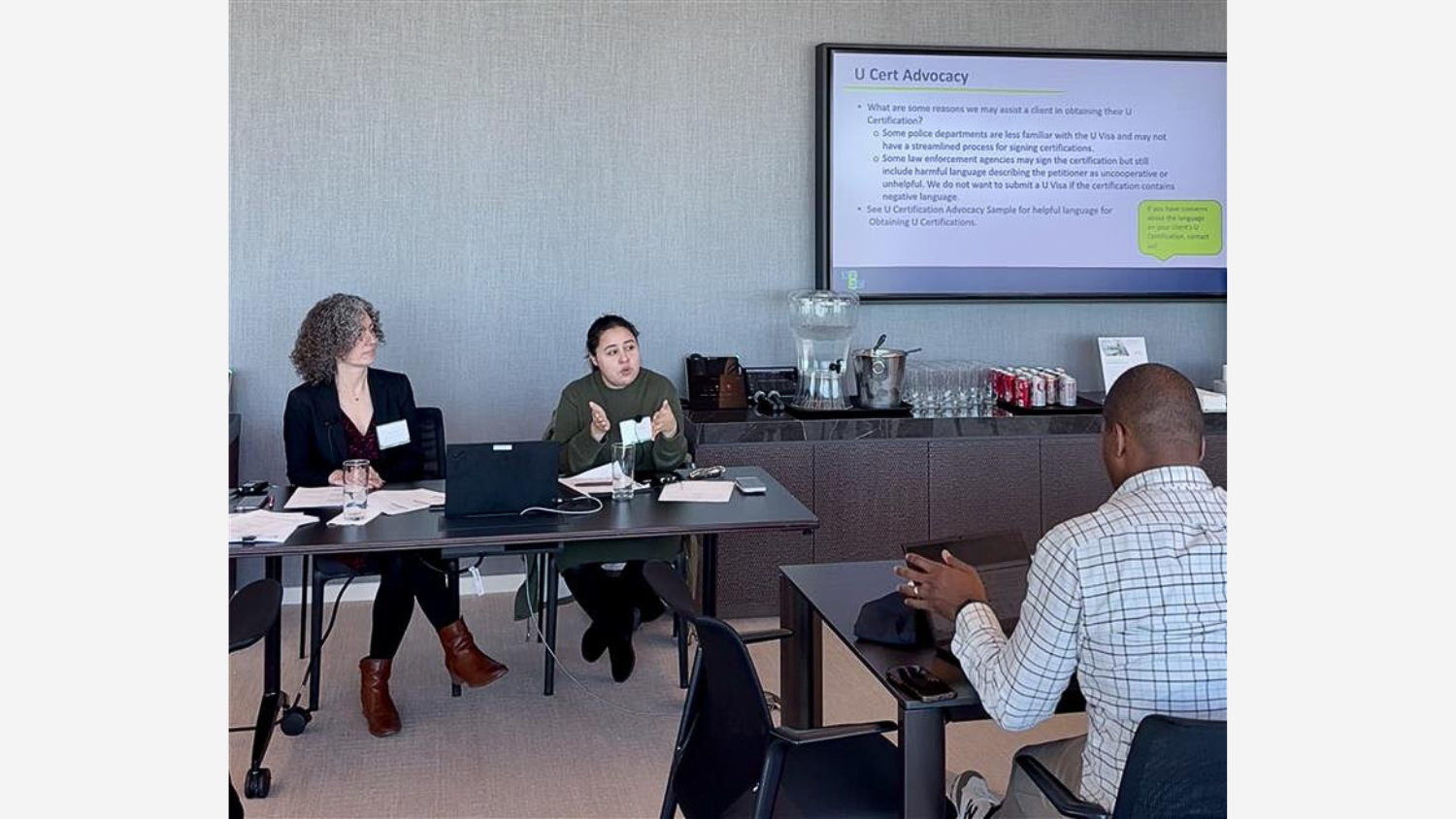
NIJC attorney training on U visas
Photo courtesy of NIJC
2. Developing the Capacity of Diaspora-Based Community Organizations
Diaspora-led and community-based organizations are seeking to expand immigration legal services programs to be able to take on complex defensive asylum and removal cases.
The Approach
Trusted organizations such as United African Organization, Indo-American Center (IAC), Instituto del Progreso Latino, and the Syrian Community Network, bring deep linguistic, cultural, and community knowledge, and are often a primary point of contact for immigrants navigating their lives in Chicago. In response to growing demand, they have expressed interest in building their legal services programs to respond to community needs. Walder Foundation’s grants will support their staff training, supervision, and mentorship to help ensure that immigrants and refugees may access complex legal services within culturally-grounded organizations.
“When legal help is offered in a familiar space, in one’s own language, by people who understand where clients are coming from, the process feels less intimidating, and clients are more comfortable asking questions and being open about what they’re facing,” shares Ajitha Reddy, Legal Director for the Indo American Center. “It’s empowering to know that high-quality legal help isn’t just for people with resources.”
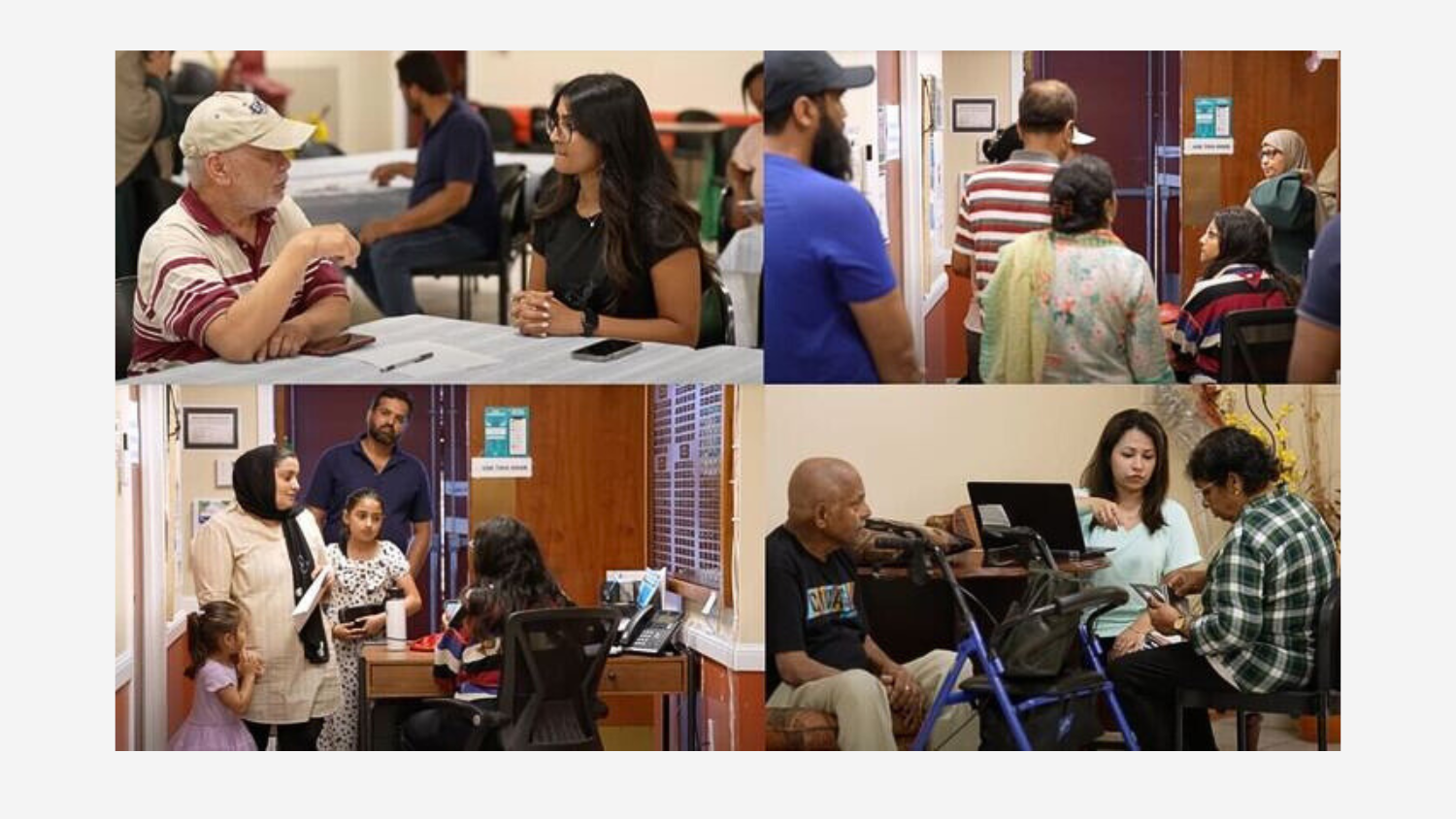
Open house at Indo American Center
Photo courtesy of Indo American Center
3. Expanding the Pipeline of Legal Advocates
A robust, diverse pipeline of trained professionals is needed for the long-term viability of immigration legal services in Chicago.
The Approach
A resilient ecosystem requires both immediate legal capacity and long-term workforce development to enable Chicago’s legal services to meet growing demand now and in the years ahead. While the field is experiencing chronic workforce shortages, Walder Foundation is investing in programs that recruit, train, and help retain legal practitioners.
The Resurrection Project’s Immigrant Justice Leadership Academy, for example, created the Colibrí Fellowship to expand the pipeline of trained Department of Justice (DOJ) Accredited Representatives. This allows non-attorney professionals to provide high-quality legal services within community-based organizations. Through support for the Immigrant Justice Corps, Walder Foundation is helping expand a prestigious fellowship program in Chicago, placing early-career attorneys into high-need immigration legal settings, strengthening removal-defense capacity while building durable career pathways. DePaul University’s Asylum and Immigration Law Clinic (AILC) is vital to the ecosystem, regularly providing trainings, coordination, and technical assistance to numerous legal aid providers in the region.
“So many obstacles exist to access accurate and reliable information about rights and benefits,” shares Sioban Albiol, Director, Asylum & Immigration Law Clinic at DePaul University. “Community partners are on the front lines of the response to these unprecedent challenges because community organizations - founded, led, staffed and based in the migrant communities they serve - are where migrants turn for help. AILC creates a space for community organizations to keep up to date on law and practice developments, learn best practices for responding to policy and adjudication trends, and benefit from highly technical legal analysis necessary for navigating complex legal issues in a changing legal landscape.”

January 2025 training hosted by DePaul University's Asylum & Immigration Law Clinic
Photo courtesy of DePaul University
Contributing to a Resilient Legal Ecosystem
By investing in these varying levels of organizations — anchor legal services organizations, diaspora-based community organizations, and training hubs — Walder Foundation is contributing to building an ecosystem that is technically proficient, culturally responsive, and sustainable for the long-term. Through this layered approach, the Foundation is helping ensure that Chicago’s legal aid community is resourced and prepared to provide the high-quality services needed for a resilient, welcoming region.
Stay engaged with Walder Foundation’s Migration and Immigrant Communities program area: walderfoundation.org/migration-and-immigrant-communities
Get more stories like this delivered to your inbox.
Sign up with your email address to receive news and updates.