Beyond the Headlines
Local journalism helps the public understand the complexity of immigration policy and migrant experiences in Chicago

Courtesy of Getty Images
A welcoming region is defined not only by its policies and institutions, but also by the public’s perception of immigrants.
How local residents view immigrants is often shaped by their own understanding of current events — and local media is the cornerstone for providing factual context and storytelling with nuance.
Local journalism brings a magnifying glass to processes and systems alongside personal experiences and contributions. To keep pace with dynamic, ever-changing realities on the ground, it needs to be resourced appropriately.
Walder Foundation’s migration and immigrant communities program area has been investing in a variety of strategies to build public understanding about immigration. Public narratives shape how communities perceive migration, impacting everyday person-to-person interactions, social cohesion, charitable giving patterns, and public policy formation. Through grantmaking, research like Lighting the Way, and convenings, Walder Foundation has provided support for community dialogues, strategic communications, creative approaches, and local nonprofit media.
To date, Walder Foundation has committed over $1M specifically to Chicago-area nonprofit media outlets that reach both broad and targeted audiences with stories, data, and explainers illuminating the challenges of immigration policy and a broad range of immigrant experiences. In a time of misinformation and increased polarization, these organizations work to ensure that Chicagoans have access to timely and quality journalism.
Block Club Chicago
At Block Club Chicago, a neighborhood-based storytelling approach is key. The news desk is structured so one dedicated reporter covers three Chicago neighborhoods. Reporters cover everything from day-to-day triumphs to struggles of immigrant communities to breaking news stories.
They’ve supplemented traditional news dissemination with needed community “products,” such as a gift guide focused on immigrant-owned businesses to support struggling local retailers and development of a What’s App channel featuring pertinent news.
“Having reporters already embedded in neighborhoods helped earn us the trust of residents before we arrived in a crisis,” shared Stephanie Lulay, Block Club Chicago Co-founder and Executive Editor. “We had already been there writing about their new businesses, their art, and their challenges.”

Photo included in Block Club Chicago story on business owners celebrating a lively weekend after challenging circumstances in the area. Little Village Vendor Lorenzo Méndez sells fruit along 26th Street.
Photo Credit: Colin Boyle/Block Club Chicago
Borderless Magazine
Borderless Magazine leans into practical, community-driven, and immigrant-centered reporting across their communications platforms.
“Over the last year, fear and misinformation have spread in immigrant communities in Chicago and beyond,” shares Nissa Rhee, Executive Director of Borderless Magazine. “This year, we’ve doubled down on our promise to our readers: to give them facts, not fear. Whether through deep investigations, “how-to” guides, or community-focused videos, Borderless empowers our readers with the information they need to make informed decisions for themselves.”
Such stories and resources align well with the organization’s forward-looking vision to reimagine immigration journalism for a more just future. To embody this vision, every Borderless Magazine story is edited by an immigrant, and all reporters come from immigrant families. This centers the immigrant experience in multiple ways.

Photo included in Borderless Magazine guide on where residents can find free food in Chicago, published in advance of Thanksgiving 2025. Pilsen Food Pantry volunteers prepare boxes for community members.
Photo credit: Lucy Baptiste/Borderless Magazine
Chicago Public Media (Chicago Sun-Times and WBEZ)
At Chicago Public Media, reach and responsibility go hand-in-hand.
The organization sees expanded immigration reporting, including breaking news and in-depth features, in the public media ecosystem as paramount. As such, they’ve recently added another reporter to specifically strengthen the Chicago Sun-Times' immigration coverage.
“Expanded immigration reporting is essential to helping our audiences understand not just policy, but people,” shared Kimbriell Kelly, Editor-in-Chief at Chicago Public Media. “We aim to make immigration coverage more accessible, connected, and representative of our community, giving Chicagoans the clarity and resources they need to navigate daily life with confidence.”

Photo included in Chicago Sun-Times story on the community's participation in the Mexican Independence Day Parade in September 2025.
Photo credit: Candace Dane Chambers/Chicago Sun-Times
Injustice Watch
Injustice Watch is a Chicago-based nonprofit journalism organization that examines issues of equity and justice in the court system. Their journalism takes the form of large-scale, investigative projects, often centering people affected by institutional injustices, as well as resources like court explainers.
Reporters carefully build sources, obtains documents and data, and identify how the courts are impacting immigrant communities in Cook County.
“The immigration court system is notoriously opaque, complex, and difficult to navigate, both for immigrants who find themselves in it and journalists trying to cover it,” shares Jonah Newman, Managing Editor for Injustice Watch. “...Our reporters are working to demystify the immigration system and help people better understand it.”
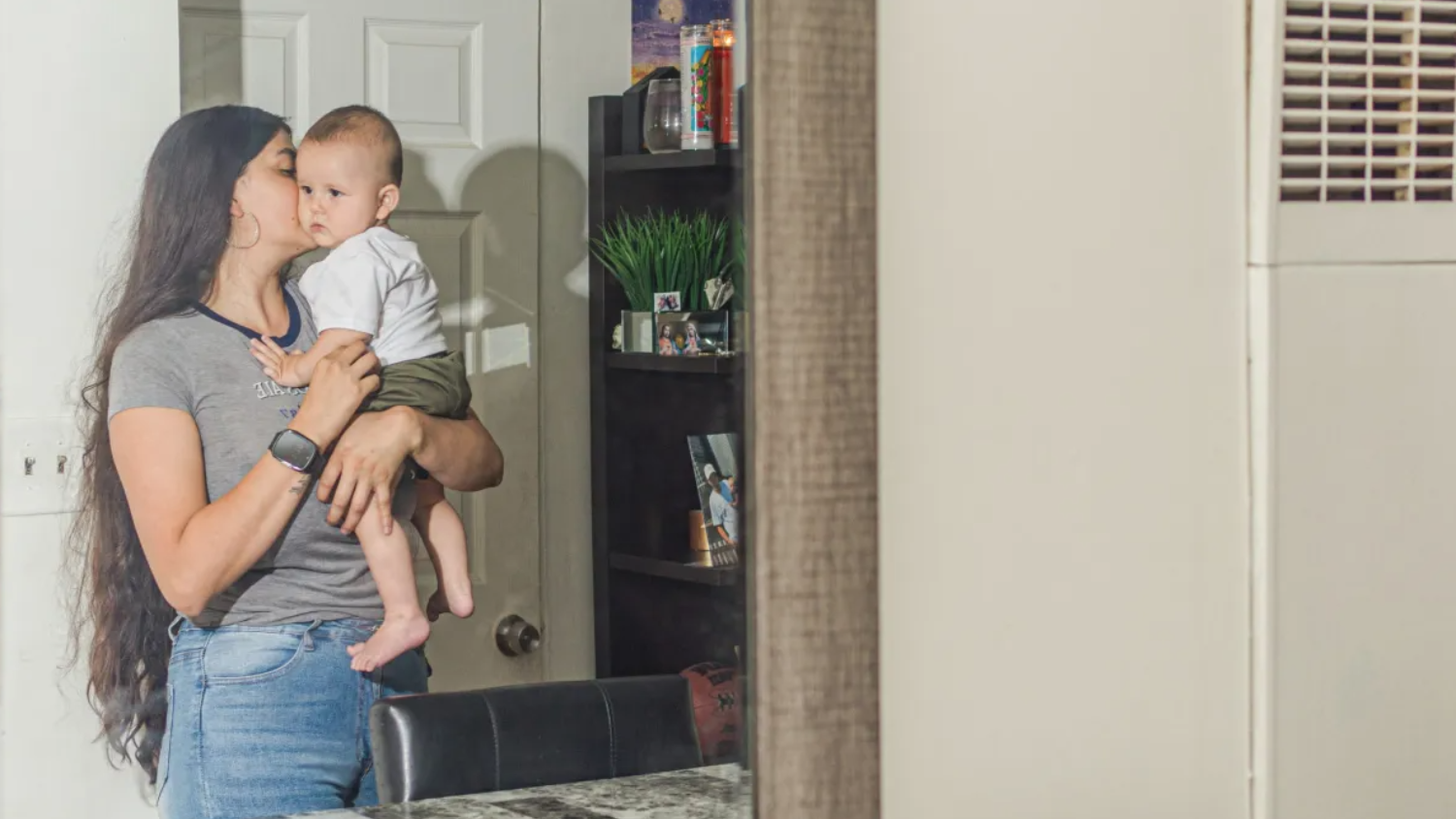
Photo included in an Injustice Watch story profiling a mother and her seven-month old son detained in an airport hotel after being apprehended by federal agents.
Photo credit: Sebastián Hidalgo/Injustice Watch
WTTW
WTTW’s Emmy Award-winning Firsthand initiative aims to take audiences beyond the headlines by amplifying personal experiences. In 2024, WTTW expanded the initial series to explore the complicated migrant experience. Though five, 10-12 minute documentaries, the series reveals why interviewees left their home countries, their perilous, cross-continental journeys, and forces that have shaped their lives in Chicago as they search for housing, jobs, and education. A documentary discussion guide for the series is also available, encouraging continued reflection in and dialogue amongst viewers.
Press Forward Chicago
Press Forward is a network with chapters nationwide, working to strengthen local news so communities stay informed, connected, and engaged. The Chicago Chapter has been a leader in providing resources to local newsrooms as they implement new strategies and tools for sustainability.
Earlier this year, Press Forward Chicago provided a round of grants to launch a first-of-its-kind initiative to support immigration stories. A special grant was also made to Chicago Public Media to host an immigration reporting hub, increasing original stories about immigrant communities and amplifying related reporting from other local newsrooms. Including pending new grants in that area, Press Forward’s total contributions will exceed $800,000 towards such efforts.
A Commitment to Understanding
Community trust and related impact from investing in journalism show up in a variety of ways — from strengthening individual neighborhoods and the organizations that exist within them to the availability of regional data to inform community understanding and policies.
As Chicago leads as welcoming region, the Foundation is committed to ensuring the public understands the root causes of migration, the complexity of immigration systems, and the realities immigrants face.
Stay engaged with Walder Foundation’s Migration and Immigrant Communities program area: walderfoundation.org/migration-and-immigrant-communities
Get more stories like this delivered to your inbox.
Sign up with your email address to receive news and updates.