Unlocking Cellular Secrets: Dr. Jiou Wang’s Latest Breakthroughs
Bench science research discoveries could transform future treatments for neurodegenerative disease and viral infections
Neurodegenerative diseases such as Alzheimer's disease (AD), frontotemporal dementia (FTD), and amyotrophic lateral sclerosis (ALS) remain among the most debilitating medical challenges with few effective treatments. A common culprit behind these conditions is proteotoxicity—the toxic buildup of misfolded proteins inside nerve cells.
Jiou Wang, M.D., Ph.D., Walder Foundation Distinguished Professor of Biochemistry and Molecular Biology at the Johns Hopkins Bloomberg School of Public Health, is a prominent scientist whose research aims to understand the cellular processes that control and respond to proteotoxicity. His team's discoveries have broad implications for addressing conditions like neurodegeneration, and even viral infections, at the molecular level, which opens new doors for therapies that could protect neurons and improve human health.
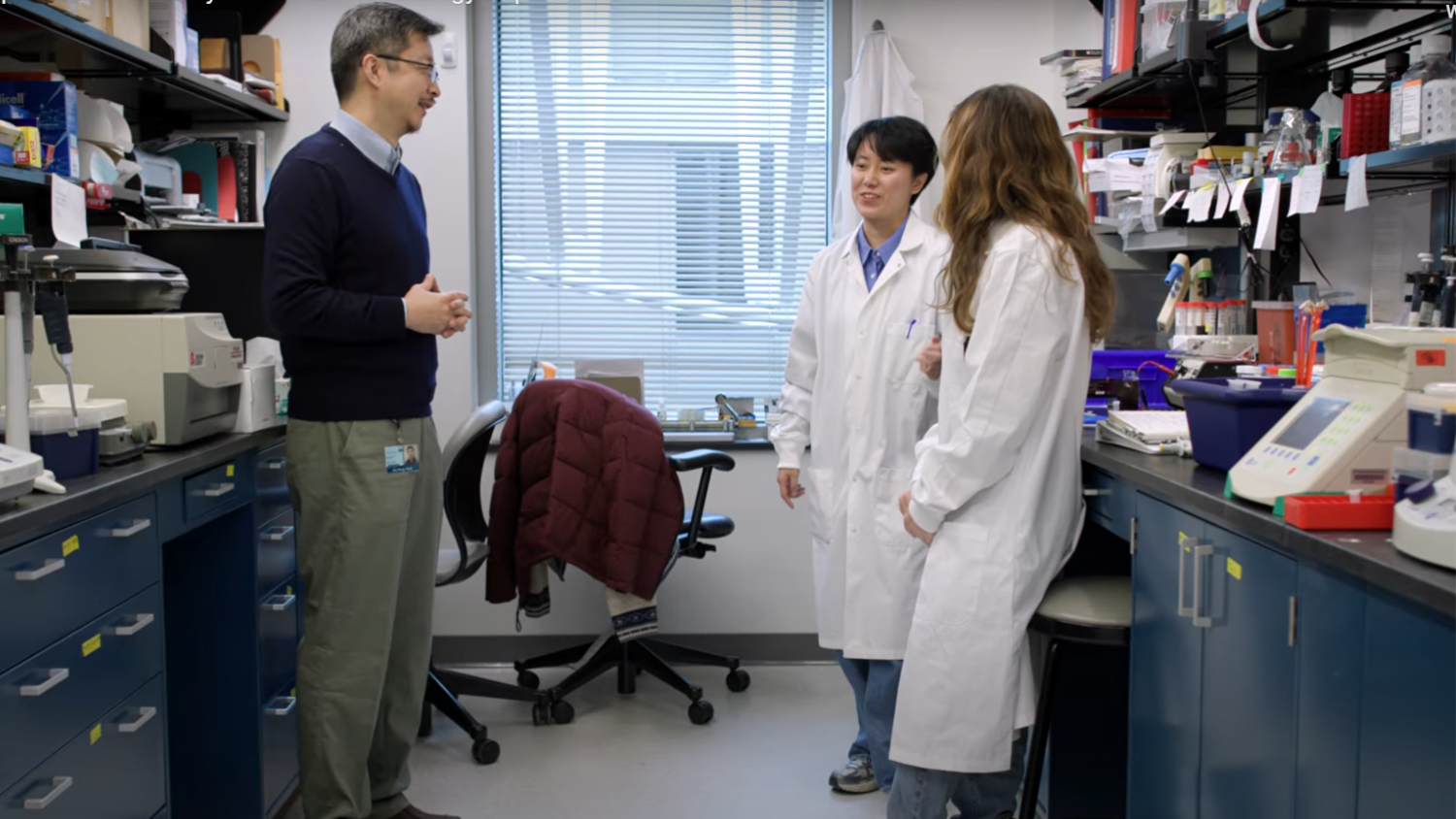
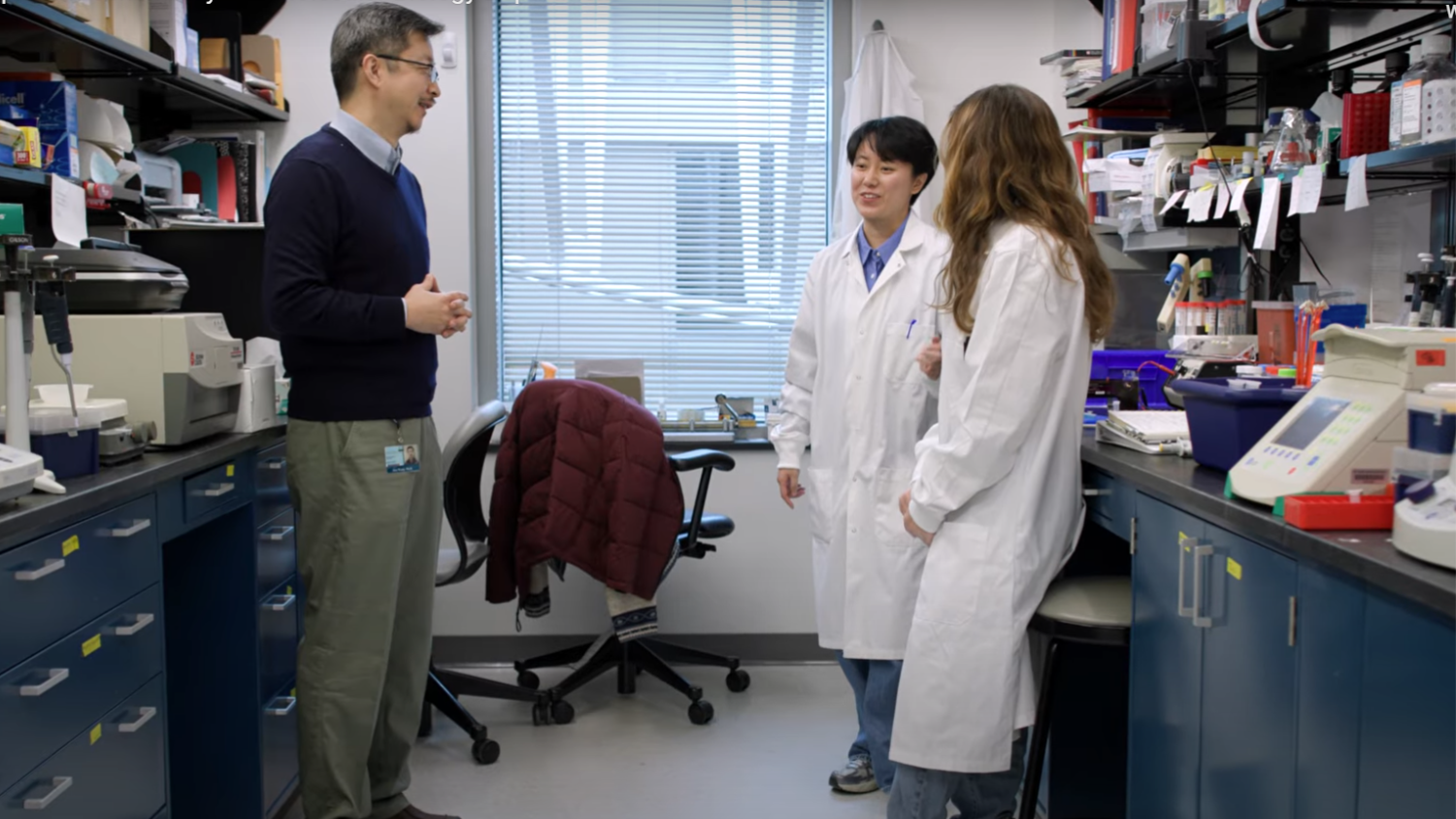
Wang (left) engages with two students in a Johns Hopkins lab.
Photo still from Johns Hopkins Biochemistry and Molecular Biology Department video.
Let's take a look at a few of Dr. Wang's most recent research findings and exciting advancements since he was awarded the Walder Foundation professorship in October 2023.
Research Advancement #1: A Metabolic Switch That Helps Neurons Stay Clean Under Stress
One hallmark of neurodegenerative disorders is the buildup of damaged proteins inside nerve cells. Normally, cells rely on a system called the proteasome to recycle these proteins, but trouble begins when that system falters.
Wang’s team discovered that an enzyme called dihydrolipoyl transacylase (DBT) acts like a metabolic switch, helping cells cope when their protein recycling machinery breaks down. By adjusting how cells process certain amino acids, the building blocks of proteins, DBT keeps energy levels regulated and activates autophagy, another cleanup pathway that helps protect cells.
This finding not only deepens the understanding of neuron protein health but also points to new strategies for preventing toxic protein buildup—a key driver of neurodegeneration.
Research Advancement #2: One Protein, Two Battles: How ITCH Links COVID-19 and Brain Diseases
Wang’s research also examines the role of itchy E3 ubiquitin protein ligase (ITCH)—a protein that acts as a critical gatekeeper for cellular processes.
ITCH influences how proteins are sorted and cleared inside cells, a function that becomes hijacked during viral infections like COVID-19 and disrupted in neurodegenerative diseases such as AD and ALS.
By understanding ITCH’s role in these pathways, strategies for neuron protection and development of virus-related disease treatment can be prioritized.
Research Advancement #3: Cracking the Code of ALS: New Strategies to Stop Toxic RNA
The most common genetic cause of ALS and FTD involves mutations in a gene called C9orf72, which produces toxic ribonucleic acid (RNA) repeats and abnormal proteins. These repeats interfere with normal cellular processes and trigger stress pathways that worsen disease.
Wang’s team discovered that a stress-response pathway (MARK2-eIF2α) fuels this damage by promoting harmful protein production. To counter this, they developed a CRISPR-based tool that precisely targets and destroys these toxic RNAs in C9orf72-related ALS/FTD.
With continued research, these findings may help advise the direction of drug therapy development for these diseases.
Future Research Directions
Wang’s team is pushing the boundaries of what we know about disease formation. Continued research is being conducted on repetitive RNA interference in C9orf72 and the connection between protein quality control and lipid metabolism in brain health.
“As can be seen through our work, we continue to be interested in translating science from bench to bedside,” shares Wang. “Learning the fundamental mechanisms of neurodegeneration provides a pathway to the development of new therapeutic targets and strategies.”
With Walder Foundation’s support, Wang and his team are empowered to take on high-risk, high-reward projects, aligning with the late Dr. Joseph Walder’s scientific philosophy and efforts to solve humanity’s toughest challenges.
“With Foundation support, we are able to do more,” shares Wang. “Nowadays, we can keep lab personnel more stable and take more risk, which translates to more funding opportunities and possible collaborations.”
Stay tuned for more updates as these discoveries move closer to enhanced, real-world impact.
Stay engaged with efforts from our Science Innovation program area: walderfoundation.org/science-innovation
Get more stories like this delivered to your inbox.
Sign up with your email address to receive news and updates.