The Infrastructure Behind Chicago's Creative Future
From field research to artist services, Experimental Sound Studio is strengthening the systems that help grow and sustain Chicago's cultural ecosystem
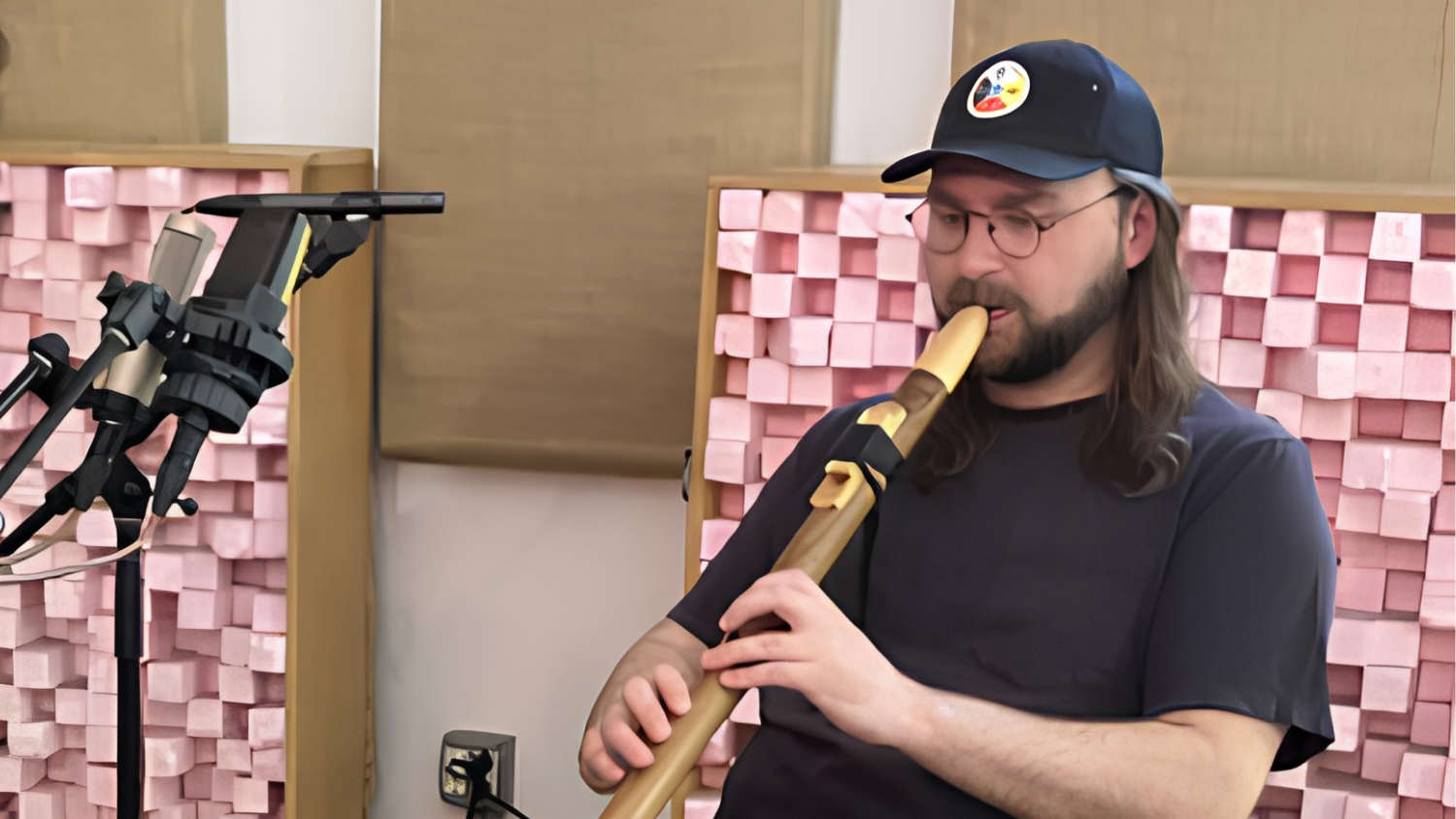
Jack Langdon, musician and Outer Ear Sessions pilot program participant, plays the bibigwan (an Ojibwe wooden flute) at Experimental Sound Studio in May 2026. Photo courtesy of Experimental Sound Studio.
Chicago has no shortage of artists and creativity. Arts Alliance Illinois recently reported that the creative sector is currently the city's third-largest industry, with musicians, storytellers, performers, and interdisciplinary artists continuing to develop new work, experiment with new ideas, and build new audiences.
What is less certain is whether these artists are able to access the infrastructure — the equipment, physical space, documentation, and more — needed to bring their work fully into the world.
Can Chicago’s arts infrastructure keep pace with its artists’ ambitions and talents?
What Studio Time and Recording Offers the Artist and Community
A recent survey* conducted by Experimental Sound Studio (ESS), a nonprofit organization that offers recording facilities, artist support programs, public programming, and archival work, specifically highlights the scale of recording challenges in Chicago.
Among respondents:
77% said cost had prevented them from recording work they wanted to create.
68% cited lack of access to engineers or technical support as a significant barrier to completing recordings.
Nearly half reported spending no money on studio time or engineering services during the previous year.
The consequences of reduced recordings and studio time for artists and their communities, according to ESS, could include:
Fewer opportunities for artists: Recording is often the mechanism that allows creative work to travel beyond its moment of creation, helping artists build visibility, access new opportunities, and reach broader audiences.
“A recording is a generative product that gives artists a tool for applying to grants, securing performances, and connecting with collaborators and new or existing audiences,” shares Adam Vida, artistic and managing director of ESS.
Increased artistic isolation: Recording access can help address an often-overlooked challenge: artistic isolation.
“The recording process brings the work into a collaborative, community space,” Vida shares. “Being an independent artist, even when you work collaboratively, can be very isolating. When you come into a studio, suddenly there is someone else who cares about the product and is on the journey with you. You can feel that you are in a community and a part of a larger continuum of creative activity.”
Loss of visibility and cultural record: Without professional documentation, creative work remains invisible, even when artistic talent and innovation are abundant.
"When artists are not able to create high-quality documentation of their work, there is greater potential to lose the breadth of sounds, ideas, and perspectives available in the public space and in the historic record," shares Olivia Junell, director of community interaction at ESS.
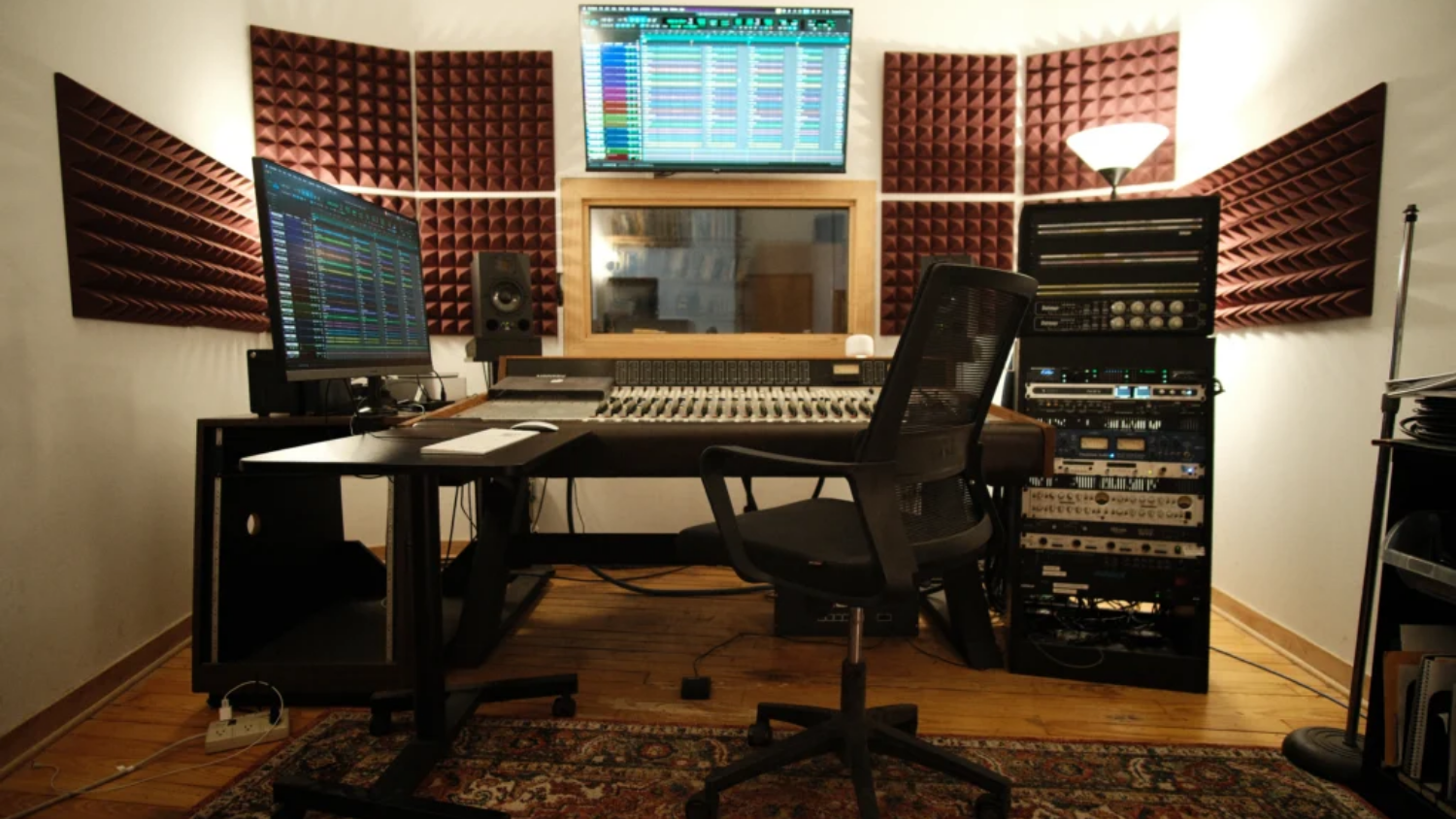
Inside Experimental Sound Studio. Photo courtesy of Experimental Sound Studio.
Putting Infrastructure Within Reach
With support from Walder Foundation, ESS launched Outer Ear Sessions, a pilot program that provides free, professionally engineered recording sessions for Chicago-area artists. At its core, the initiative is designed to help close the gap between artistic ambition and access to professional recording infrastructure.
Applications to participate in the program came from 30 of Chicago's 77 wards, and they represented artists across a wide range of experience levels and disciplines. Artists working in jazz, hip-hop, electronic music, storytelling, interdisciplinary performance, and experimental sound all applied for support, affirming the extensive range of Chicago's creative ecosystem.
ESS selected more than 20 artists through the program's first two rounds, with plans to serve additional artists in the coming year.
Early program feedback from the selected artists suggests that removing financial and technical barriers can have a significant impact. For example, one survey participant reflected that the resulting project "would never in a million years be what it's becoming" without the support provided through the program, and described ESS staff as going "above and beyond" in helping shape the creative process.
See how this work is unfolding, as shared with our community on social media:
From Recording Sessions to Sector-Wide Insights
Alongside offering recording sessions, the pilot program also prioritizes collecting information about artists' economic circumstances, access to resources, professional networks, and career pathways.
That information can help ESS and others look beyond individual programs and consider what kinds of infrastructure artists need to build sustainable creative careers.
ESS plans to share the pilot program’s data analysis and key takeaways publicly, creating opportunities for other arts organizations, funders, and community leaders to learn from the effort and for support to be strengthened over time.
For Junell and her colleagues, this program’s success operates on multiple levels.
"At one level, success means helping artists bring new creative work into the world," shares Junell. "At another, it means creating stronger connections within Chicago's artistic community. At its broadest level, success means generating insights that can inform future efforts to make creative careers more sustainable and accessible in Chicago and beyond."
Building Chicago's Creative Future
A thriving creative city requires artists with fresh ideas and the infrastructure that allows those ideas to become recordings, performances, collaborations, careers — and eventually, part of the cultural record.
By supporting artists today and sharing what it learns along the way, ESS is contributing to building the knowledge, relationships, and infrastructure to help sustain Chicago's creative future.
* Ninety-eight survey respondents represented dozens of Chicago wards and many stages of career development. Respondents were recording artists with interests in the genres of the following types of music: experimental, improvised, electronic, jazz, singer-songwriter, noise, rock, folk, contemporary classical, and other-unspecified.
Stay engaged with efforts from our Performing Arts program area: walderfoundation.org/performing-arts
Get more stories like this delivered to your inbox.